Four tools every fibre-to-the-home installer needs in the bag, in the order to buy them, and the GPON wavelength detail that decides which power meter is the right one.
Affiliate disclosure — Networking Room participates in the Amazon Services LLC Associates Program and earns from qualifying purchases. Nothing on this page is placed or paid for by a manufacturer.
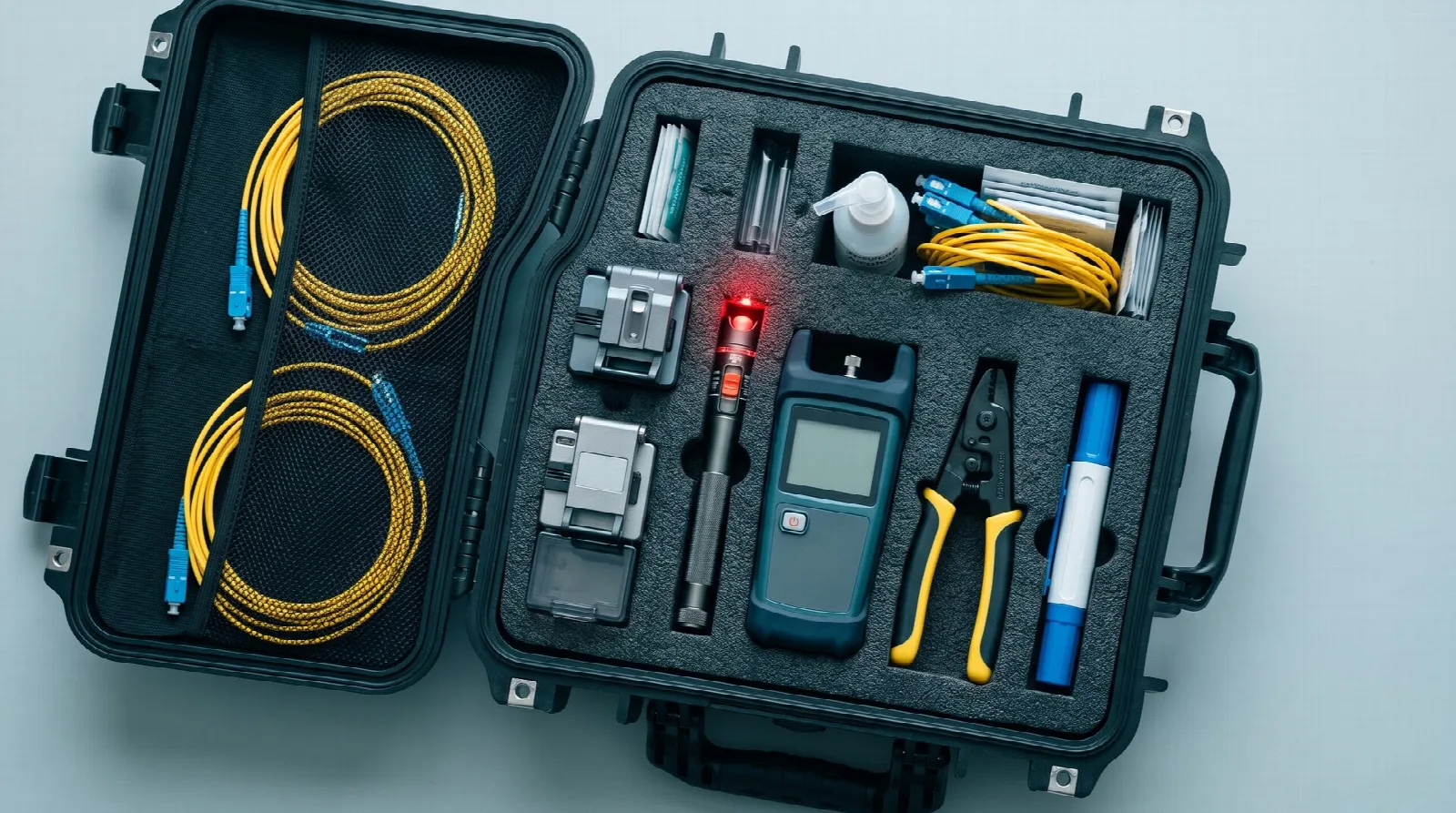
Illustration: a fibre technician kit in a hard case, with cleaver, power meter and fault locator
Buy first
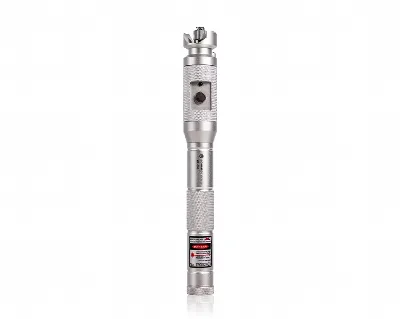
Visual fault locator
Traces a fibre and shows breaks, tight bends and bad connectors as a red glow. The cheapest tool that saves the most time.
Buy second
Optical power meter
Reads the light level so you can check a link against its loss budget. It must cover GPON’s 1310 and 1490 nm.
Buy third
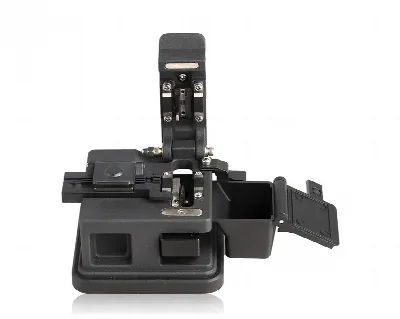
Cleaver and strippers
A clean, flat cleave is where a good termination starts.
Do not skip
Cleaning and inspection
Dirty connectors are one of the commonest causes of fibre trouble.
How we chose
The order matters more than the brands. We followed the tool lists published by the Fiber Optic Association and trade publications, then ordered them by how much time each saves a new installer on a customer drop.
01
Buy first
Visual fault locator
A VFL injects visible red light at 650 nm into a fibre so you can trace it, check continuity and find bends, breaks and bad connectors by the glow. The Fiber Optic Association lists it as standard test equipment. Jonard’s rugged VFL-300 uses a 650 nm laser and is specified for fibres up to 3 miles; Fluke Networks’ VisiFault is the other name to look at. It also verifies polarity and continuity end to end.
A power meter reads the light level at the end of a link so you can compare it with the loss budget. GPON carries data downstream at 1490 nm and upstream at 1310 nm, with 1550 nm used for video overlay, so the meter must read those wavelengths. Jonard’s FPM-50A, for example, lists 1310, 1490 and 1550 nm among its wavelengths over a range of −50 to +26 dBm. One catch: upstream light from customer ONUs arrives in bursts, which a basic continuous-light meter can misread, and a PON-specific meter is built to handle.
Termination starts with a flat, clean cleave. The Fiber Optic Association’s termination list includes a cable jacket stripper, a buffer stripper, a connector crimper and a scriber or cleaver, and says newer termination kits include a quality cleaver like those used with fusion splicers. Complete FTTH kits that bundle a cleaver, strippers, a VFL and a power meter are sold widely and quality varies, so check the kit’s meter wavelength list and test the cleaver on scrap fibre before trusting it on a customer drop. The buy link below points to one example, Jonard Tools’ FC-500 precision cleaver, from the same maker as the fault locator above.
Dirty connectors are one of the commonest causes of fibre trouble, and EC&M notes that newer cleaning tools are much more effective than alcohol and wipes. The FOA also lists a connector inspection microscope in its test-kit list. Buy one-click cleaner pens for SC and LC connectors and an inspection scope early; they are cheap next to a callback. The buy link below points to US Conec’s IBC cleaner for 2.5 mm connectors (SC, FC and ST); LC connectors need the 1.25 mm version.
An OTDR and a fusion splicer are the next tier. The Fiber Optic Association lists an OTDR as optional and generally for outside plant, so it is not needed for drops, and EC&M notes that technicians form strong opinions about splicer brands. Buy them after the basics, and if you can, try the brand you intend to use before you commit.
Do I need an OTDR for FTTH drops?
Not to start. A VFL and a power meter cover most drop faults. An OTDR is generally an outside-plant tool, useful for locating faults on longer runs.
Which connector does GPON use?
Most GPON equipment uses SC/APC connectors, usually green. Check your ONU and OLT, and never mix APC with UPC connectors: it damages them and adds loss.
Can I use a normal power meter on a live GPON line?
Downstream light is continuous, so a standard meter reads it. Upstream light from the ONU is burst-mode, so use a PON-capable meter if you need to measure it.
Sources
Specifications and findings above come from these pages, read on 26 November 2026. Specifications change between revisions, so check the product page before you buy.
Runs network operations for a licensed fibre ISP in Khulna, Bangladesh (AS137403) — GPON access, MikroTik edge, BGP upstream. Every review here is tested against that network rather than a lab loop.